Blog

  • OM Ayurveda Swarn Shaktiprash: Pure Ayurvedic Gold, Silver & Saffron Rasayana for Peak Strength and Lifelong Immunity

    OM Ayurveda Swarn Shaktiprash: Pure Ayurvedic Gold, Silver & Saffron Rasayana for Peak Strength and Lifelong Immunity

    ​Amid heavy workloads, environmental stressors, and modern dietary deficiencies, maintaining optimal immunity, mental clarity, and physical endurance has become increasingly difficult. When chronic fatigue and seasonal illnesses become frequent, conventional supplements often fall short because they fail to address cellular depletion.

    ​Formulated on ancient classical tenets, OM Ayurveda Swarn Shaktiprash offers a high-potency, restorative Ayurvedic solution. Cooked traditionally with pure cow’s desi ghee, nutrient-dense wild amla, and fortified with authentic Swarna (Gold), Chandi (Silver), and Kashmiri Kesar (Saffron), this herbal Rasayana is engineered to fortify Ojas (core vitality) and nurture every tissue layer (Dhatus) in the human body.

    ​What is OM Ayurveda Swarn Shaktiprash?

    ​OM Ayurveda Swarn Shaktiprash is an all-season herbal jam and dietary rejuvenator crafted under strict Ayurvedic pharmaceutical standards. Unlike ordinary sweet spreads or synthetic multivitamins, this formulation is prepared with 100% Pure Cow’s Desi Ghee, which serves as an organic Yogavahi (catalytic carrier)—ensuring deep cellular bioavailability of critical micronutrients.

    ​Enriched with purified noble metals and time-honored adaptogens, it delivers comprehensive nourishment for working professionals, active children, students, and seniors seeking reliable, chemical-free vitality.

    • ​Packaging: 500 g Family Pack Jar
    • ​Formula Quality: 100% Ayurvedic, Pure & Authentic, Non-GMO
    • ​Key Fortifiers: Sona (Gold Bhasma), Chandi (Silver Bhasma), and Kesar (Saffron)
    • ​Website Link: Buy OM Ayurveda Swarn Shaktiprash Online

    ​Key Health Benefits of Swarn Shaktiprash

    • ​Fortifies Natural Immunity & Defense: Loaded with natural bio-available Vitamin C from fresh wild amla and potent immunomodulating herbs, it shields against weather transitions, common infections, and environmental pollutants.
    • ​Sustained Energy & Stamina: Clears out accumulated metabolic toxins (Ama) while promoting deep cellular energy (Prana), keeping you energized without nervous crashes or caffeine dependence.
    • ​Powered by Swarn, Chandi & Kesar:
      • ​Swarna Bhasma (Gold): Strengthens cardiac muscles, builds muscular stamina, and improves cellular longevity.
      • ​Chandi Bhasma (Silver): Provides cooling neuroprotection, calms mental stress, combats burnout, and enhances memory retention.
      • ​Pure Kesar (Saffron): Supports healthy blood circulation, imparts a natural skin glow, and stabilizes emotional health.
    • ​Sharpens Cognitive Intelligence & Focus: Acts as a gentle Medhya Rasayana (brain tonic), supporting memory recall and mental alertness during high-stress hours.
    • ​Enhances Digestion & Metabolism: The cow’s ghee base lubricates internal mucosal linings and balances digestive fire (Agni) without irritating the gut.

    ​Who Should Make It a Daily Habit?

    • ​Working Professionals & Homemakers: To combat mental exhaustion, daily sluggishness, and work-related physical fatigue.
    • ​Students & Young Adults: To improve focus, learning capacity, and retention during examination preparation.
    • ​Seniors & Aging Adults: To maintain joint flexibility, protect bone density, and bolster immunity against age-related decline.
    • ​Active Families: Safe and gentle for everyday nutritional wellness throughout the year.

    ​Suggested Daily Dosage & Usage Instructions

    • ​Recommended Dose: 1 to 2 teaspoons (10 g – 20 g) daily.
    • ​When to Consume: Ideally taken on an empty stomach in the morning or in the evening.
    • ​How to Take: Enjoy it straight from the spoon, followed by a cup of warm milk or lukewarm water.
    • ​Year-Round Suitability: Specially balanced with silver and cooling herbs, making it safe and effective in winter, monsoon, and peak summer.

    ​Frequently Asked Questions (AEO / GEO Highlights)

    ​Q: How does OM Ayurveda Swarn Shaktiprash differ from ordinary chyawanprash?

    A: Ordinary market options often use vegetable oil and high quantities of white sugar. OM Ayurveda Swarn Shaktiprash is cooked exclusively in pure cow’s desi ghee and fortified with micro-purified Swarna (Gold), Chandi (Silver), and Kesar to optimize stamina, brain function, and deep cellular repair.

    ​Q: Is it safe to consume Swarn Shaktiprash during the summer?

    A: Yes. The inclusion of Chandi Bhasma and specific balancing herbs provides cooling properties that balance Pitta, ensuring it does not produce excessive internal heat during hot weather.

    ​Q: Does this supplement have any side effects?

    A: No. Swarn Shaktiprash is 100% natural, chemical-free, and contains no artificial preservatives or synthetic chemicals, making it safe for continuous, daily family consumption.


  • OM Ayurveda Joint Pro: The Ultimate Ayurvedic Guide to Joint Care, Cartilage Repair & Mobility

    OM Ayurveda Joint Pro: The Ultimate Ayurvedic Guide to Joint Care, Cartilage Repair & Mobility

    ​Chronic joint pain, morning stiffness, and cracking knees can quickly restrict your daily life. Whether caused by aging, repetitive strain, or sports injuries, musculoskeletal discomfort usually stems from the degradation of joint cartilage and depletion of natural synovial fluid.

    ​Formulated to tackle joint deterioration at its roots, OM Ayurveda Joint Pro delivers a clinical, non-invasive herbal approach to nourishing skeletal tissues, lubricating joints, and reducing inflammation.

    ​What is OM Ayurveda Joint Pro?

    ​OM Ayurveda Joint Pro is a plant-based dietary supplement designed to support long-term bone density, cartilage repair, and rapid muscle recovery.

    ​In Ayurvedic principles, joint degeneration and stiffness occur due to an aggravated Vata Dosha and the accumulation of Ama (metabolic toxins) within joint capsules. Joint Pro helps eliminate these deep toxins while providing regenerative nutrients to improve flexibility, balance joint lubrication, and relieve discomfort without harsh synthetic compounds.

    • ​Packaging: 90 Tablets per bottle (Comprehensive 45-day supply)
    • ​Form: Easy-to-swallow coated tablets
    • ​Suitability: 100% Vegetarian, free from heavy metals and harsh chemicals

    ​Key Health Benefits of Joint Pro

    • ​Accelerates Cartilage Rebuilding: Delivers restorative phytochemicals directly to damaged connective tissue, helping curb chronic joint degradation.
    • ​Improves Joint Lubrication & Mobility: Restores optimal synovial fluid levels to reduce friction, eliminate clicking or popping sounds, and improve range of motion.
    • ​Soothes Chronic Pain & Morning Stiffness: Helps clear inflammatory pathways to ease joint tightness after waking up or sitting for long stretches.
    • ​Strengthens Bone Matrix: Supports bone mineral retention, helping keep surrounding skeletal structures resilient against everyday wear.
    • ​Promotes Post-Activity Muscle Recovery: Protects tendons and ligaments while reducing muscular spasms and strain around stressed joints.

    ​Core Ayurvedic Ingredients

    • ​Shallaki (Boswellia serrata): An ancient anti-inflammatory resin rich in boswellic acids that works directly on joint capsules to reduce swelling, protect cartilage, and ease degenerative arthritis discomfort.
    • ​Hadjod (Cissus quadrangularis): Known in classical Ayurveda as “Asthisamharaka” (bone healer), Hadjod stimulates bone tissue remodeling, enhances collagen formation, and speeds up structural recovery.
    • ​Ashwagandha (Withania somnifera): A potent adaptogen that strengthens the muscular framework around weight-bearing joints, combats physical fatigue, and lowers systemic inflammation.

    ​Recommended Usage & Dosage Instructions

    • ​Daily Dosage: Take 2 tablets daily.
    • ​Routine: Take 1 tablet in the morning after breakfast and 1 tablet at night after dinner.
    • ​Method: Swallow with a glass of lukewarm water or warm milk.
    • ​Recommended Course: Use consistently for 6 to 8 weeks to allow proper cartilage regeneration and lasting mobility support.

    ​Frequently Asked Questions

    ​How does OM Ayurveda Joint Pro differ from over-the-counter painkillers?

    Standard pain relievers block discomfort temporarily without repairing damaged tissue. OM Ayurveda Joint Pro supplies targeted botanical actives to rebuild joint cartilage, replenish fluid balance, and improve structural stability for sustained joint health.

    ​Who should use Joint Pro?

    It is ideal for older adults managing osteoarthritis or stiffness, active fitness enthusiasts needing joint recovery, and office workers suffering from chronic back, hip, or knee strain.

    ​Does Joint Pro cause any side effects?

    Joint Pro is formulated with traditional Ayurvedic herbs tested for purity and safety. It does not cause acidity, dependence, or digestive distress, making it safe for continuous, long-term wellness regimens.

  • The AI Investment Boom: Opportunity, Bubble or the Next Great Market Cycle?

    The AI Investment Boom: Opportunity, Bubble or the Next Great Market Cycle?

    Artificial intelligence has become one of the most powerful forces driving global financial markets.

    In August 2026, that trend became impossible to ignore. The S&P 500 gained about 2.7% while the Nasdaq-100 climbed approximately 4.2%, giving both indexes their strongest August performance since 2021. Technology stocks and companies connected to AI infrastructure were among the major beneficiaries.

    But beneath the impressive numbers lies a much more complicated question:

    Are investors witnessing the beginning of a genuine technological revolution—or the formation of another financial bubble?

    The Numbers Behind the Optimism

    The strongest argument for the AI boom is that the technology is already producing enormous revenues.

    Companies involved in semiconductors, cloud computing, data centres and AI software are benefiting from unprecedented demand.

    Nvidia remains perhaps the clearest example.

    The company’s extraordinary growth has transformed AI from a futuristic concept into a major corporate investment cycle. Hyperscale technology companies are spending enormous amounts on data centres, computing capacity and electricity infrastructure to support the next generation of AI models.

    This spending is creating a ripple effect across the global economy.

    Semiconductors need advanced manufacturing. Data centres require electricity. Electricity networks need new infrastructure. Cooling systems, construction companies, networking equipment and even industrial metals benefit from the expansion.

    Copper, for example, reached record levels in August as AI data-centre construction increased demand for the metal while global supply remained constrained.

    But Wall Street Is Becoming More Selective

    The problem is that enormous spending does not automatically guarantee enormous profits.

    Investors are beginning to ask whether today’s AI infrastructure investments will generate sufficient returns over the next decade.

    This is where the debate over an AI bubble begins.

    AI-related equities have become increasingly sensitive to news about data-centre investment, financing conditions and future earnings expectations. The Reserve Bank of Australia has also highlighted growing volatility in AI-related equities, particularly among semiconductor companies and hyperscalers.

    The concern is straightforward.

    If companies spend hundreds of billions of dollars building AI infrastructure, they eventually need to generate enough revenue to justify that investment.

    If AI adoption grows faster than expected, today’s valuations could prove reasonable.

    If adoption disappoints, some of the most highly valued companies in the market could experience significant corrections.

    Interest Rates Make the Story More Complicated

    The AI boom is also happening against an increasingly challenging interest-rate environment.

    During August, the US 10-year Treasury yield reached around 4.77%, while the 30-year yield climbed above 5.3%. Higher yields increase financing costs and reduce the present value investors assign to future earnings.

    That creates an unusual market situation.

    AI companies are delivering powerful growth, but investors are simultaneously demanding a higher return for taking financial risk.

    This means the market may increasingly separate companies with real earnings and cash flows from companies whose valuations depend primarily on future expectations.

    AI Is Also Becoming a Financial-System Risk

    The discussion is no longer limited to stock prices.

    Andrew Bailey, Governor of the Bank of England and chair of the Financial Stability Board, warned in late August that advanced AI could create new risks for the global financial system. These include AI-enabled cyberattacks, concentration around shared technologies and vulnerabilities created by increasing dependence on advanced models.

    That introduces an entirely different dimension to the AI investment story.

    Financial institutions are rapidly adopting AI for trading, risk management, customer service, fraud detection and research.

    The benefits can be enormous.

    But greater dependence on automated systems also means that failures, cyberattacks or unexpected model behaviour could potentially spread through interconnected financial markets.

    So, Is It a Bubble?

    The answer may be partly—but that does not mean the technology is a mistake.

    The dot-com bubble of the late 1990s provides a useful comparison. The internet was genuinely transformative, yet many internet companies became dramatically overvalued before the eventual crash.

    AI could follow a similar pattern.

    The technology may fundamentally transform productivity, healthcare, finance, manufacturing and entertainment while some of today’s most expensive AI investments still prove unsuccessful.

    A technological revolution and a financial bubble can exist at the same time.

    The Bigger Picture

    The AI story has entered a new stage.

    The first phase was about discovering what AI could do.

    The second phase is about turning AI capability into sustainable economic returns.

    That transition will determine whether today’s enormous valuations are justified.

    For investors, the most important question is therefore no longer simply:

    “Who is leading the AI race?”

    It is:

    “Who can turn AI spending into durable profits?”

    That distinction could define the next major cycle in global markets.

  • The New Trade War: Why the U.S.–Canada Tariff Fight Matters to the Global Economy

    The New Trade War: Why the U.S.–Canada Tariff Fight Matters to the Global Economy

    A trade relationship that has supported one of the world’s most integrated economies is entering a period of uncertainty.

    The United States and Canada are escalating a tariff dispute that could affect everything from automobiles and steel to food, electronics and consumer prices. What makes the situation particularly important for global investors is not simply the size of the tariffs, but what it signals about the future of international trade.

    Canada has responded to new U.S. tariffs with retaliatory measures covering billions of dollars of American imports. The measures target hundreds of products across industries including steel and aluminum, appliances, agricultural equipment, pulp and paper, plastics and electronics.

    The escalation follows the breakdown of trade negotiations between Washington and Ottawa, raising concerns that a dispute between two closely connected economies could become increasingly difficult to contain.

    From Negotiation to Retaliation

    The latest measures represent a significant shift from negotiation toward economic retaliation.

    Canada has attempted to structure its response around specific categories of U.S. goods, while also introducing support measures for businesses and workers affected by the disruption.

    Washington, meanwhile, has indicated that additional tariffs on Canadian automobiles, automotive parts and steel remain possible.

    For businesses, this creates an increasingly difficult operating environment. Companies must now consider not only the cost of producing their products, but also the possibility that those products could face substantially higher costs simply because they cross an international border.

    Why the Auto Industry Is Particularly Vulnerable

    The North American automobile industry is not built around separate national economies.

    A vehicle can cross the U.S.–Canada border multiple times during production as parts move between factories, suppliers and assembly plants.

    That makes tariffs particularly disruptive.

    A higher tariff on a Canadian component does not necessarily hurt only the Canadian manufacturer. The additional cost can ultimately reach an American factory, an automaker’s profit margin and, eventually, the consumer.

    The United States and Canada conduct hundreds of billions of dollars in annual trade, demonstrating how deeply connected their economies remain.

    This interdependence means that a prolonged tariff battle could create costs on both sides of the border.

    The Consumer Price Problem

    Tariffs are often presented as a way to protect domestic industries, but they can also increase costs throughout the economy.

    When an imported product becomes subject to a tariff, businesses must decide whether to absorb the additional expense, negotiate with suppliers or pass some of the cost on to customers.

    That means tariffs can eventually appear in retail prices.

    For consumers, the impact may be particularly noticeable when tariffs affect everyday products or essential industrial inputs. For businesses, higher import costs can reduce profit margins and make long-term planning more difficult.

    If tariff increases spread across multiple sectors, they can also complicate the fight against inflation.

    A Bigger Risk for Global Trade

    The most important question may be larger than the U.S. and Canada.

    What happens if tariff disputes become a permanent feature of global trade?

    For decades, companies have built international supply chains around the assumption that goods can move relatively efficiently between countries.

    Manufacturers have concentrated production where costs are competitive. Companies have relied on international suppliers. Investors have valued businesses partly on their ability to operate across borders.

    A sustained rise in tariffs changes that calculation.

    Companies may begin relocating factories, finding alternative suppliers or holding larger inventories to protect themselves from future trade restrictions.

    These changes can increase production costs and reduce efficiency.

    Over time, the result could be a world where businesses prioritize supply-chain security over maximum cost efficiency.

    Markets Are Watching More Than the Headlines

    Financial markets are focused on several potential consequences.

    Inflation is one of the biggest concerns. If tariffs push up the cost of imported goods, central banks could face greater difficulty balancing economic growth against price stability.

    Corporate earnings are another concern. Companies with complicated international supply chains could see margins squeezed if they cannot pass higher costs to customers.

    Currencies can also react as investors reassess the relative strength of the two economies.

    And finally, business investment could be affected. Companies may delay major investment decisions until there is greater clarity around future trade rules.

    Could This Become a Wider Trade War?

    That remains the critical question.

    If both sides continue escalating tariffs, the dispute could move from a targeted disagreement into a broader restructuring of North American trade.

    Yet there is also a powerful reason for both countries to eventually seek compromise: their economies are deeply dependent on each other.

    American manufacturers rely on Canadian resources and components, while Canadian businesses depend heavily on access to American consumers.

    That mutual dependence could eventually create pressure for a negotiated settlement.

    The Bigger Picture

    The U.S.–Canada tariff dispute is a reminder that trade policy is no longer simply a political issue.

    It has become an investment, inflation and corporate-profit issue.

    For global investors, the outcome could influence decisions far beyond North America. If companies begin permanently redesigning their supply chains, the effects could reach manufacturers, commodity producers, logistics companies, retailers and financial markets around the world.

    The bigger story is therefore not just about two neighbouring countries imposing tariffs on each other.

    It is about whether the global economy is moving toward a new era in which economic security, domestic production and resilient supply chains matter more than the low-cost globalisation that defined the previous generation.

    For businesses and investors alike, that shift could prove far more consequential than any individual tariff.

  • Gold’s New Role in Global Finance: Why Investors Are Looking Beyond the Dollar

    Gold’s New Role in Global Finance: Why Investors Are Looking Beyond the Dollar

    For decades, gold has occupied a familiar place in global finance: a hedge against inflation, a safe haven during crises and a reserve asset held by central banks.

    But in 2026, gold’s role is becoming considerably more important.

    August provided another clear example. Gold rallied by roughly 10% during the month, recovering strongly after its sharp decline earlier in the year. By late August, the metal was trading around $4,600 per ounce, while Goldman Sachs Research raised its year-end 2026 forecast to $4,900 per ounce.

    The question is no longer simply whether gold can rise further. The bigger question is why global investors are increasingly treating gold as a strategic financial asset rather than simply a traditional safe haven.

    A Hedge Against a Changing Financial System

    One of the strongest forces behind gold’s resurgence is uncertainty surrounding currencies and government debt.

    The United States continues to carry a federal debt burden exceeding $40 trillion, while long-term Treasury yields climbed sharply during August. The 30-year Treasury yield touched approximately 5.34%, its highest level since 2007.

    Normally, higher bond yields make gold less attractive because gold does not generate interest.

    Yet gold continued to attract investors.

    That suggests something important: investors are not only responding to interest rates. They are also considering fiscal risks, currency stability and geopolitical uncertainty.

    Gold does not depend on the creditworthiness of a particular government. That characteristic becomes particularly valuable when investors begin questioning the long-term sustainability of government finances.

    Central Banks Are Changing the Equation

    Perhaps the most important development is the behaviour of central banks.

    Central banks have been increasing their interest in gold as a way to diversify reserves. Goldman Sachs Research says strong central-bank demand is one of the major reasons it expects gold prices to remain elevated.

    This matters because central-bank purchases are fundamentally different from short-term speculative trading.

    A hedge fund may buy gold today and sell it next month. A central bank typically thinks in decades.

    That makes continued official-sector demand a potentially powerful structural support for the market.

    Recent moves in Europe have also highlighted this shift. The Dutch central bank announced plans to move gold holdings from New York to London, citing crisis preparedness and greater tradability.

    Such decisions do not necessarily indicate a loss of confidence in the US financial system. But they demonstrate that central banks are increasingly thinking about where and how their reserves are stored, particularly in an era of geopolitical uncertainty.

    Geopolitics Adds Another Layer

    Gold’s traditional safe-haven function has also returned to the spotlight.

    The ongoing conflict and uncertainty surrounding the Middle East have increased demand for assets that can protect portfolios when geopolitical risks suddenly rise.

    Gold’s behaviour in 2026 has been particularly interesting because it initially suffered during the Iran conflict, falling below $4,000 after reaching a January peak above $5,500. But by August, it had recovered sharply toward $4,400–$4,600.

    This recovery suggests that investors continue to view gold as a long-term portfolio diversifier even when short-term market conditions become extremely volatile.

    But Gold Is Not a One-Way Trade

    The bullish story has risks.

    Gold can be highly sensitive to US interest rates and the dollar. If inflation remains persistent and the Federal Reserve becomes more aggressive, higher real yields could reduce demand for non-yielding assets.

    There is also the question of valuation.

    After such a powerful rebound, gold can experience sharp corrections. Goldman Sachs itself notes that greater use of derivatives can increase gold-price volatility.

    Investors therefore need to distinguish between gold as a strategic allocation and gold as a short-term trading opportunity.

    The Bigger Picture

    Gold’s resurgence in 2026 is about much more than fear.

    It reflects a changing global financial environment in which investors and central banks are balancing inflation, geopolitical risk, government debt, currency uncertainty and shifting monetary policy.

    The most important development may therefore not be the price of gold itself.

    It is the fact that gold is increasingly being treated as part of the architecture of global finance.

    For investors, that could make gold relevant even after today’s geopolitical headlines disappear.

  • OM Ayurveda ORTHO Tablets: Advanced Ayurvedic Relief for Joint Pain, Mobility & Flexibility

    OM Ayurveda ORTHO Tablets: Advanced Ayurvedic Relief for Joint Pain, Mobility & Flexibility

    ​Joint stiffness, muscular soreness, and cartilage wear can limit everyday movement, whether due to aging, heavy workouts, or sedentary lifestyles. OM Ayurveda ORTHO Tablets are crafted to manage musculoskeletal discomfort naturally by combining classical Ayurvedic herbs that nourish cartilage, support bone density, and promote painless joint movement.

    ​What Are OM Ayurveda ORTHO Tablets?

    OM Ayurveda ORTHO Tablets are an advanced herbal dietary supplement engineered to target the root causes of joint wear and tear. In Ayurveda, joint stiffness and discomfort are primarily linked to an imbalance of Vata Dosha and the accumulation of Ama (metabolic toxins) in the joint cavities. This formulation neutralizes deep-seated inflammation, restores lubrication, and preserves natural range of motion without synthetic chemicals.

    ​Addresses the 5 Core Signs of Joint Health

    • ​Mobility & Flexibility: Helps lubricate stiff joints to restore natural, fluid movement during daily tasks.
    • ​Pain & Cramp Relief: Soothes persistent joint aches, knee discomfort, and localized muscular spasms.
    • ​Stiffness Reduction: Eases morning stiffness, back tightness, and joint locking.
    • ​Bone & Muscle Support: Strengthens connective tissues, ligaments, and underlying bone matrix.
    • ​Cartilage Protection: Delivers vital herbal nutrients that protect joints from progressive physical wear and oxidative stress.

    ​Ideal Candidates for Use

    • ​Seniors dealing with age-related joint deterioration, stiffness, or arthritis symptoms.
    • ​Working Professionals facing chronic backache, neck tension, or knee discomfort from long sitting hours.
    • ​Athletes & Fitness Enthusiasts looking to accelerate recovery, reduce post-workout soreness, and protect tendons.

    ​Suggested Usage & Dosage Guidelines

    • ​Recommended Dose: Take 1 tablet twice daily after meals.
    • ​Consumption: Swallow with a glass of normal or lukewarm water.
    • ​Packaging: 60 tablets per bottle (full 30-day supply).
    • ​Storage: Keep tightly closed in a cool, dry place away from direct sunlight and moisture.
  • Meta has struggled at selling anything other than ads. Will AI be different?

    Meta has struggled at selling anything other than ads. Will AI be different?

    • Meta is making a major push to expand its business beyond online advertising, including through subscriptions for AI features and services.
    • History shows that success is not guaranteed, as Meta has struggled to find traction in any business that doesn’t involve digital advertising.
    • “It is hard enough to succeed in one business, let alone two,” said Max Willens, an analyst at Emarketer.

    Meta is once again trying to prove it can make money by doing something other than selling ads. It’s not a strategy that’s worked in the past, but CEO Mark Zuckerberg is betting artificial intelligence will bring better results.

    The company said this week that it will begin testing two subscription services for its ChatGPT-like Meta AI app and website. Those paid offerings, available first in Singapore, Guatemala and Bolivia, coincide with the official release of premium subscription plans for Instagram, Facebook and WhatsApp, and higher-tier versions of its verification subscription service, which is designed to help businesses protect their brand.

    Also this week, Zuckerberg said at Meta’s annual shareholder meeting that a potential cloud computing business is “definitely on the table,” a move that could eventually pit the company against Amazon, Microsoft and Google in cloud infrastructure.

    Since Zuckerberg’s company, previously known as Facebook, began selling digital ads almost two decades ago, advertising has been its only real business. In its earnings report last month, Meta said that nearly 98% of its $56.3 billion in first-quarter revenue came from advertising. It’s a remarkably lucrative market, with some of the highest profit margins in the tech industry, and one Meta has long dominated in the U.S., alongside Google.

    Meta just recorded its fastest growth rate for any quarter since 2021, showing that the online ad market is currently as robust as ever. But the rapid emergence of AI has raised questions about what happens if and when users turn to new interfaces for information and are no longer spending so much time on screens where they’re exposed to a constant barrage of links.

    And when Meta has asked consumers and companies to open their wallets for anything other than ads, the answer has generally been no.

    The 2018 debut of the Portal video-calling device was ultimately a bust and was taken off the market four years later. Meta’s $2 billion acquisition of virtual reality hardware startup Oculus in 2014 has yet to produce a breakout VR headset, resulting in the company’s Reality Labs unit racking up over $80 billion in operating losses since late 2020.

    Reality Labs has shifted resources from VR to the more promising AI-powered smart glasses. The company is trying to capitalize on the surprise success of the Ray-Ban Meta glasses, in partnership with EssilorLuxottica, a notable exception for Meta in hardware.

    Then there’s crypto. Zuckerberg jumped into the space in 2019 with a proposed cryptocurrency initiative called Libra. The effort faced intense regulatory scrutiny, resulting in the last remnant of the crypto project shuttering in 2022.

    Trying to sell social media services to businesses has also been a struggle. In 2016, Facebook debuted its business-focused Workplace chat product, only to announce in 2024 that it would eventually close the service.

    ‘New sources of revenue’
    Despite an uphill battle, some analysts are optimistic that Meta can find a new route to revenue in AI. The Meta AI subscriptions announced this week will cost $7.99 and $19.99 a month, depending on certain features and capabilities. The stock rose nearly 4% on Wednesday after the news landed.

    Analysts at Wolfe Research wrote in a note that day that subscriptions could contribute up-to $3 billion in Meta’s total revenue for 2027, growing to $16 billion by 2030. That’s still a small number for a company generating over $200 billion in revenue a year, but it marks a substantial opportunity for Meta in a burgeoning market.

    The Wolfe analysts said they recommend buying the stock “based on our long-term view that the company’s scale, AI investments, category leadership position, and product catalysts should enable META to outgrow the digital advertising market, gain scale, and generate new sources of revenue.”

    Meta declined to comment.

    Max Willens, an analyst at Emarketer, said Meta is a victim of its own success in online ads. Because the company’s core business dwarfs any other efforts, “it can be very hard for a corporate parent to sustain enthusiasm for something that is naturally going to be much smaller, likely forever,” he said.

    “The circumstances around each of Meta’s past endeavors are different,” Willens said. “But I would say that it is hard enough to succeed in one business, let alone two.”

    Willens said the subscription push could be successful if viewed as an aid to online advertising rather than an entirely new line of business. Because some of the new services are tailored to creators and power users, the goal could ultimately be to get more content for Meta’s apps and services and to keep people engaged on Facebook and Instagram for longer, he said.
    Selling technology to enterprises could be a much bigger challenge.

    Shashi Bellamkonda, research director at Info-Tech Research Group, said Meta has a lot of work to do to build an enterprise business “from the ground up, because the company is so focused only on direct to consumers.”

    Bellamkonda characterized Meta’s Workplace offering as seemingly “half-hearted, because they were so focused on only the social aspect of Facebook,” which makes money from ads.

    To successfully compete in the enterprise, particularly in cloud, Meta will have to “ramp up processes, platforms, technology, and most importantly, the manpower” required to operate, maintain, and sell products and services, Bellamkonda said. When it comes to customer support, Meta has been going in the opposite direction, cutting staff through layoffs.

    Zuckerberg made no guarantees that Meta would enter the cloud computing market, which is led in the U.S. by Amazon Web Services, followed by Microsoft Azure and then Google. The reason to do so, he said, would be if it turns out that the company has excess capacity after its hefty investments in AI infrastructure.

    In April, Meta raised its 2026 guidance for AI-related capital expenditures to between $125 billion and $145 billion, up from a prior range of $115 billion to $135 billion.

    Forrester analyst Naveen Chhabra said current cloud computing leaders “are winning because they have developed a huge stack” over the years, while “Meta does not have that, at least not yet.”

    Chhabra noted that past efforts by companies like Verizon and CenturyLink to create cloud businesses out of their vast data center resources didn’t pan out.

    “Historical evidences like telcos jumping in the cloud business hoping their capacity and network can bring business was proven wrong across geos and times,” Chhabra said.

  • Top Wall Street analysts see robust growth potential in these 3 stocks

    Top Wall Street analysts see robust growth potential in these 3 stocks

    The latest earnings season has eased concerns about a potential artificial intelligence bubble. Increased spending by hyperscalers and other companies has reinforced confidence in the demand for AI infrastructure and software solutions.

    Investors keen on capitalizing on the AI boom can track recommendations from top Wall Street analysts, who give key insights into a company’s ability to capture AI-driven demand despite macro uncertainties and rising competition.

    Here are three stocks favored by some of Wall Street’s top pros, according to TipRanks, a platform that ranks analysts based on their past performance.

    Datadog
    AI-powered observability and security platform Datadog
    (DDOG) is this week’s first pick. In early May, the company impressed investors with its market-beating first-quarter results and robust outlook.

    Following an investor webinar with Vikram Thaker, the senior director of North American business at global consulting firm Cognizant, Bank of America analyst Koji Ikeda reiterated a buy rating on Datadog stock and raised his price target to $260 from $225. The analyst said that following the webinar, he is more positive on the demand backdrop for “best-of-breed infrastructure software vendors” such as Datadog and JFrog
    . He believes that these two companies have the ability to surpass Bank of America and the Street’s estimates.

    Ikeda added that the demand for high-quality observability and security platforms like Datadog will increase as enterprises transition to the cloud and AI, making everything more complex. Consequently, he expects the momentum in Datadog’s performance to continue.

    The five-star analyst highlighted that Datadog delivered first-quarter results that were way above estimates. Also, the second-quarter revenue growth outlook of more than 30% reinforced Ikeda’s confidence in DDOG’s potential to generate further acceleration in its growth. He emphasized that new large AI-related deals prove Datadog’s mission-critical positioning and robust AI-led tailwinds.

    “Execution remains top notch, with improving demand trends supporting further beat-and-raise potential,” said Ikeda.

    Ikeda ranks No. 867 among more than 12,200 analysts tracked by TipRanks. His ratings have been profitable 55% of the time, delivering an average return of 10.4%. See Datadog Hedge Funds Activity on TipRanks.

    Micron Technology
    Micron Technology
    (MU) stock is having a solid run this year, thanks to unprecedented demand for memory fueled by the ongoing AI boom and elevated pricing stemming from supply challenges. Despite the impressive rally in MU stock, UBS analyst Timothy Arcuri significantly raised his price target to $1,625 from $535, while reaffirming a buy rating.

    “We believe the market will start to put a more ‘normal’ multiple on the stock and MU will continue to re-rate higher as more details emerge about the structural changes AI has driven to the entire memory complex,” said Arcuri.

    Notably, the five-star analyst again raised his calendar years 2027 to 2029 earnings per share estimates, citing traction in long-term agreements across the memory industry. Arcuri highlighted that these new LTAs are of longer durations, involve fixed-volume commitments, and have a partially fixed pricing structure. They are in contrast to offtake agreements in prior periods, which were simply volume-based.

    Furthermore, Arcuri’s supply chain checks on LTAs across the industry indicate that up to 30% of double data rate memory volumes could soon be locked in at pricing only slightly below current levels. The analyst explained that such agreements will allow Micron to trade some near-term revenue for strong demand visibility and a more stable earnings trajectory.

    Based on these LTAs, Arcuri expects Micron’s EPS to remain easily above $100 over 2027-2029 and expects the company to deliver $400 billion in free cash flow over this period. Specifically, the analyst raised his 2027, 2028, and 2029 EPS estimates to $155, $167, and $117, respectively, from $133, $122, and $77.

    Remarkably, Arcuri ranks No. 2 among more than 12,200 analysts tracked by TipRanks. His ratings have been profitable 81% of the time, delivering an average return of 56.6%. See Micron Ownership Structure on TipRanks.

    Lam Research
    Lam Research
    (LRCX), a provider of wafer fabrication equipment and services to the semiconductor industry, is this week’s third stock pick. The AI-led surge in semiconductor manufacturing has boosted demand for Lam Research and triggered a strong rally in its shares.

    Top Mizuho analyst Vijay Rakesh increased his price target for LRCX stock to $380 from $330 and reiterated a buy rating. His higher price target reflects strength in demand amid elevated WFE spending.

    Rakesh now expects WFE spending to rise 23% to $153 billion in 2026, with 2027 spending to see a 24% surge to $190 billion. In fact, he sees additional upside to these estimates, based on increased capex by Taiwan Semiconductor Manufacturing
    , or TSMC; Samsung; and Micron. Specifically, the total memory WFE investment is projected to be about $112 billion this year.

    “With higher revised 2026E/2027E WFE spend, we now see significant upside to consensus estimates for LRCX, MKSI, and AMAT, with LRCX potentially offering the most compelling estimate upside as the steady outperformer vs. WFE and peers,” said Rakesh.

    Also, the five-star analyst expects the WFE market to continue to benefit from accelerating NAND node transitions, with Lam Research highlighting $40 billion in node transition spending. The majority of this investment is expected before the end of 2027.

    Rakesh ranks highly as well. He is #4 among more than 12,200 analysts tracked by TipRanks. His ratings have been successful 74% of the time, delivering an average return of 79.2%. See Lam Research Statistics on TipRanks.

  • Why Trump reversed course to fast-track psychedelic drugs for mental healthcare

    Why Trump reversed course to fast-track psychedelic drugs for mental healthcare

    • President Donald Trump aims to fast-track research into psychedelic therapy for conditions like post traumatic stress disorder and depression in a break from his first administration policy.
    • Advocates see the move as a major step forward, but there are still questions about safety as studies into the therapies move forward.
    • The push brings both opportunities and risks for patients and the companies developing the therapies.

    Marie Phelan said she had never heard of MDMA before spotting a flyer seeking veterans suffering from post traumatic stress disorder.

    Now, she says the psychoactive drug more commonly known as ecstasy or molly has changed the trajectory of her life.

    “My experience of MDMA was that it just cracked my heart wide open,” said Phelan who enlisted in the U.S. Army Reserve in 1999 and was deployed to Iraq in 2003.

    “I was carrying this big heavy rucksack and I just put it down on the beach and I started unpacking it one little teeny tiny thing at a time and setting each little thing out on the waves,” Phelan said of the release from the treatment.

    Phelan isn’t alone turning to alternative treatments for trauma. She is among a small group of Americans who have undergone psychedelic-assisted therapy through clinical trials studying new approaches to mental health treatment.

    Now, access to those therapies is closer than ever to being expanded more broadly, bringing new options for patients and opportunities for companies — but also new scrutiny about safety and effectiveness.

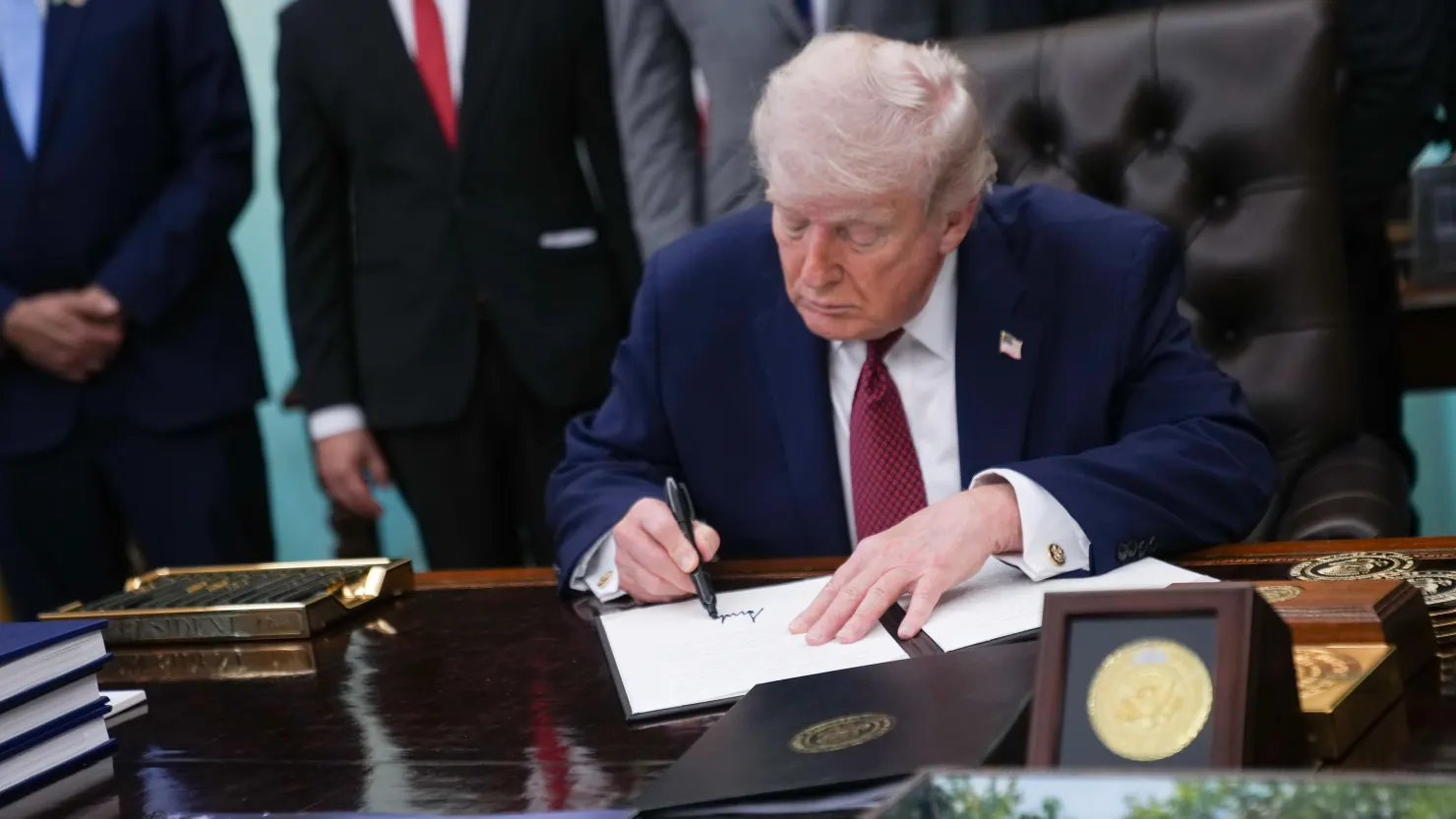
    In April, President Donald Trump signed an executive order aimed at accelerating research into psychedelic drugs for mental illness. The move came as his administration issued priority review vouchers to three companies developing psychedelic or MDMA-like therapies — Compass Pathways, Usona Institute and Transcend Therapeutics — aimed at speeding up parts of the FDA review process.

    The order marks a notable shift in tone from Trump’s first term, when his administration took a harder stance on cannabis and other controlled substances. This time, the White House said psychedelic compounds “show potential in clinical studies to address serious mental illnesses for patients whose conditions persist after after completing standard therapy.”

    Investors quickly piled into the sector. Shares of psychedelic drug developers such as Compass Pathways and other rivals tied to the space rallied following the announcement, with Wall Street analysts arguing the order could legitimize an industry long viewed as fringe.

    The science, however, remains deeply debated, raising questions about how much room the segment has to grow.

    Inside the lab

    Historically, research into psychedelics has focused more narrowly on certain conditions. Psilocybin — the active compound in psychedelic mushrooms — was tied to treating depression, MDMA-assisted therapy to PTSD and LSD to anxiety.

    While drugs like psilocybin and ibogaine — a psychoactive compound derived from a West African shrub that some advocates believe may help treat addiction and traumatic brain injuries — are considered classic psychedelics, MDMA is technically classified as an empathogen.

    Still, researchers and regulators often group MDMA-assisted therapy within the broader psychedelic medicine field because the treatments involve supervised therapeutic sessions designed to address conditions like PTSD, depression and addiction.

    “One of the things that’s important to recognize is these are all very different drugs,” said Brandon Weiss, a researcher at the Center for Psychedelic and Consciousness Research at Johns Hopkins University School of Medicine. “Ibogaine and other psychedelic compounds have different safety profiles and different risks.”

    Clinical research around some of these compounds has shown promising results. In late-stage trials sponsored by the nonprofit psychedelic research advocacy group Multidisciplinary Association for Psychedelic Studies, roughly 71% of participants with severe PTSD no longer met diagnostic criteria for the disorder after MDMA-assisted therapy sessions.

    The FDA rejected a previous application for MDMA-assisted therapy in 2024, citing concerns around the design of that same late-stage study and the need for additional data. Some psychedelic researchers viewed that decision as evidence the agency remains cautious despite mounting public enthusiasm.

    Countries outside the United States have already begun loosening restrictions. Australia became the first country to allow authorized psychiatrists to prescribe MDMA and psilocybin for certain mental health conditions in 2023. Researchers in Canada, Switzerland and the United Kingdom have also expanded clinical studies examining psychedelic-assisted therapies.

    Even so, Weiss cautions that not all psychedelic compounds carry the same risks — or the same amount of evidence supporting their use.

    “Psychedelic compounds, they have different safety profiles, different risks,” said Weiss. “Ibogaine has particularly high cardiovascular risks, and so what needs to be done is a very measured, methodical weighting of the safety and the efficacy between ibogaine and other compounds.”

    The White House executive order specifically referenced accelerating research of ibogaine. But unlike psilocybin or MDMA-assisted therapy, ibogaine has not undergone large-scale clinical trials in the United States and has been linked to potentially serious cardiovascular side effects.

    Weiss said the real worry among some researchers is not that psychedelic therapies are ineffective, but that political momentum could outpace the scientific process.

    “My biggest concern would be that FDA standards are relaxed for politically motivated reasons,” he said. “It’s not clear that that is the case, but what’s required is a lot more scientific research and a very objective interpretation of the risks and benefits.”

    Kabir Nath, Compass Pathways CEO, said his company is adhering to the same standards the FDA holds for all drugs. He said the company would not have started the process of submitting its drug, COMP360 Psilocybin, for approval in the first place if it felt the data was insufficient.

    Even supporters of psychedelics used as treatment acknowledge the therapies are far more complex than taking a prescription pill at home. Most psychedelic-assisted therapy trials involve hours of preparation with clinicians, supervised treatment sessions and follow-up integration therapy afterward.

    The treatments also come with risks. Patients can experience panic attacks, paranoia, elevated heart rates or psychological distress during sessions. In some clinical environments, doctors use so called “rescue drugs” like benzodiazepines or antipsychotic medications to calm patients experiencing severe adverse reactions or overwhelming hallucinations.

    Phelan said her own experience with MDMA-assisted therapy felt less like intoxication and more like confronting years of trauma in a controlled setting.

    For veterans’ advocates like Juliana Mercer, executive director of nonprofit Healing Breakthrough, the administration’s order represents validation for patients who have spent years pushing for broader access to alternative mental health treatments. Mercer, a U.S. Marine Corps veteran, said psychedelic-assisted therapy “completely changed” her life after she struggled with trauma.

    “One of the things that this experience was able to give me was that permission to heal,” said Mercer.

    Why now?
    As the Trump administration pursues VA staffing cuts and deeper military involvement with Iran, some veterans are increasingly questioning the prioritization of their care.

    Thus, some critics of the Trump administration have said that the executive order’s timing is of particular importance as the president attempts to gain back veteran support ahead of the midterm elections.

    Phelan, however, rejected the idea that backing for psychedelic therapies will translate into into political support for Trump.

    “They’d made so many cuts to veteran benefits and medical services,” Phelan said. “Great, you did a good thing. You did a right thing … I can’t speak for how other people will react, but if that’s the intention, I doubt it’s effective.”

    Some industry executives also argue the executive order may have less immediate impact than headlines suggest. Companies like Compass Pathways were already nearing the final stage of Phase 3 trials before the White House announcement, meaning FDA approval submissions were likely coming regardless.

    Nath, CEO or Compass Pathways, said the order primarily signals broader political acceptance of the field.

    “It certainly gives a significant tailwind, encouragement and validation,” Nath said.

  • Best quotes from the 2026 IISS Shangri-La Dialogue: Defense spending, multilateralism and the future of the Asia-Pacific

    Best quotes from the 2026 IISS Shangri-La Dialogue: Defense spending, multilateralism and the future of the Asia-Pacific

    As Asia’s premier defense summit wraps up, leaders have put forward perspectives on a range of topics in the defense realm.

    Here are some of the most interesting quotes that CNBC has heard during the summit.

    On defense spending

    SINGAPORE, SINGAPORE - MAY 31: Dutch Deputy Prime Minister and Defence Minister Dilan Yesilgoz-Zegerius speaks during the 23rd IISS Shangri-La Dialogue at the Shangri-La Hotel on May 31, 2026 in Singapore. Senior defence officials and military leaders from across the Asia-Pacific and beyond convene at the Shangri-La Hotel in Singapore for the International Institute for Strategic Studies (IISS) Shangri-La Dialogue, one of Asia's premier track-one intergovernmental security forums. (Photo by Ezra Acayan/Gett

    SINGAPORE, SINGAPORE – MAY 31: Dutch Deputy Prime Minister and Defence Minister Dilan Yesilgoz-Zegerius speaks during the 23rd IISS Shangri-La Dialogue at the Shangri-La Hotel on May 31, 2026 in Singapore. Senior defence officials and military leaders from across the Asia-Pacific and beyond convene at the Shangri-La Hotel in Singapore for the International Institute for Strategic Studies (IISS) Shangri-La Dialogue, one of Asia’s premier track-one intergovernmental security forums. (Photo by Ezra Acayan/Getty Images)

    Ezra Acayan | Getty Images News | Getty Images

    Allies who refuse to step up and carry their own weight for our collective defense will face a clear shift in how we do business.

    — Pete Hegseth, U.S. Secretary of Defense

    You have a choice, you’re either on the menu or you’re having a seat at the table, and if you don’t step up with your defense spending, make sure that you are also delivering, then you will be on the menu, and I don’t want the Dutch, the Netherlands be on the menu, I want to have a voice at the table.

    — Dilan Yesilgoz-Zegerius, Netherlands Deputy Prime Minister and Defence Minister

    The Philippines is dead set on building its own resilience by increased defense spending by gearing up for acquiring greater capabilities, more lethal deterrence capabilities, building deterrence, and at the same time broadening its alliances.

    — Gilberto Teodoro, Philippines National Defence Secretary

    The more powerful we are, the more effort we need to spend to reassure others, because ultimately in the defense sector people look at not just capabilities, people look at intention.

    — Chan Chun Sing, Singapore Defence Minister

    Defense is an important part of maintaining our sovereignty individually as countries, and having the ability to get together to complement each other’s capabilities is incredibly important. No one country can do it all alone.

    — General Jennie Carignan, Chief of the Defense Staff of Canada

    On the Asia-Pacific region

    SINGAPORE, SINGAPORE - MAY 29: Vietnamese President To Lam delivers the keynote address during the 23rd IISS Shangri-La Dialogue at the Shangri-La Hotel on May 29, 2026 in Singapore. Senior defence officials and military leaders from across the Asia-Pacific and beyond convene at the Shangri-La Hotel in Singapore for the International Institute for Strategic Studies (IISS) Shangri-La Dialogue, one of Asia's premier track-one intergovernmental security forums. (Photo by Ezra Acayan/Getty Images)

    SINGAPORE, SINGAPORE – MAY 29: Vietnamese President To Lam delivers the keynote address during the 23rd IISS Shangri-La Dialogue at the Shangri-La Hotel on May 29, 2026 in Singapore. Senior defence officials and military leaders from across the Asia-Pacific and beyond convene at the Shangri-La Hotel in Singapore for the International Institute for Strategic Studies (IISS) Shangri-La Dialogue, one of Asia’s premier track-one intergovernmental security forums. (Photo by Ezra Acayan/Getty Images)

    Ezra Acayan | Getty Images News | Getty Images

    The Asia-Pacific is an open space, and all countries with legitimate interests can have a role to play in contributing to its peace, stability, and development…What the region seeks is neither the mere presence nor absence of any major power. What it seeks is responsible commitment.

    — To Lam, President of Vietnam

    While a decent peace is our goal, make no mistake, America is a Pacific nation, and we insist that China respect our longstanding position in the region.

    — Pete Hegseth, U.S. Defense Secretary

    If the one-China principle is upheld, if [there is] no external interference into China’s process of national reunification, then Chinese living on the two sides of Taiwan Strait, we would be fully capable of finding a solution and achieve national reunification, and if that comes, I can assure you any instability in the Taiwan Strait will be removed once and for all.

    — Cui Tiankai, former Vice Minister of Foreign Affairs, China

    Some of you may have heard the term “neo-militarism,” but nothing [is] further from the truth. Think about it. There is a country that has a huge arsenal of nuclear weapons and strategic bombers. Japan has neither of such weapons, and yet Japan is labeled “neo-militarist.” Isn’t it strange?

    — Shinjiro Koizumi, Japan Defence Minister

    [China is] unrepentant with their expansionism and unrelenting, and to deny that would be to be absolutely dishonest… China is not accountable at all, either to their own domestic people, because of the autocratic nature of their government, and they’ve been non-transparent and actually dishonest in their international engagements.

    — Gilberto Teodoro, Philippines National Defence Secretary

    On multilateralism

    SINGAPORE, SINGAPORE - MAY 30: Australia Deputy Prime Minister and Defence Minister Richard Marles speaks during the 23rd IISS Shangri-La Dialogue at the Shangri-La Hotel on May 30, 2026 in Singapore. Senior defence officials and military leaders from across the Asia-Pacific and beyond convene at the Shangri-La Hotel in Singapore for the International Institute for Strategic Studies (IISS) Shangri-La Dialogue, one of Asia's premier track-one intergovernmental security forums. (Photo by Ezra Acayan/Getty Ima

    SINGAPORE, SINGAPORE – MAY 30: Australia Deputy Prime Minister and Defence Minister Richard Marles speaks during the 23rd IISS Shangri-La Dialogue at the Shangri-La Hotel on May 30, 2026 in Singapore. Senior defence officials and military leaders from across the Asia-Pacific and beyond convene at the Shangri-La Hotel in Singapore for the International Institute for Strategic Studies (IISS) Shangri-La Dialogue, one of Asia’s premier track-one intergovernmental security forums. (Photo by Ezra Acayan/Getty Images)

    Ezra Acayan | Getty Images News | Getty Images

    What we are about is seeing the maintenance of the global rules-based order in the Indo-Pacific, and for that matter, around the world… the global rules give a country like Australia, a middle power, agency in a way that a world ruled simply by power and might does not.

    — Richard Marles, Australia Deputy Prime Minister

    [The U.S. will] be able to do all sorts of things here, whether it’s freedom of navigation or disaster response. I do think that there are some opportunities here, and it’s nice to see some of our other partners step up in a very multilateral way.

    — U.S. Senator Tammy Duckworth, Democrat from Illinois

    We were told that rules matter, commitments matter, and international norms would apply equally to all nations, regardless of size and power, but today treaties, humanitarian principles, and international commitments are being disregarded and selectively interpreted whenever these do not align with geopolitical interests.

    — Mohamed Khaled bin Nordin, Malaysia Defence Minister

    The current global security governance mechanisms urgently need reform. Developed countries are overrepresented, while developing countries are severely underrepresented. This does not conform to the trend of the times.

    — Major General Meng Xiangqing, Professor, People’s Liberation Army National Defence University, China

    [China is] definitely losing a chance of dialogue, a chance of dialogue in a time which is contested, which is…dangerous. In my 42 years as a soldier, I’ve never experienced such dangerous times like we are living in the world as today.

    — General Carsen Breuer, Germany Chief of Defence

    [The Dialogue] is a great framework for getting together and having pretty decent discussions on security between what’s still called the “collective West”, but fragmented Asia, because there is no “collective Asia” here anymore.

    — Pavlo Klimkin, former Ukrainian minister of foreign affairs