Category: Uncategorized

  • Meta has struggled at selling anything other than ads. Will AI be different?

    Meta has struggled at selling anything other than ads. Will AI be different?

    • Meta is making a major push to expand its business beyond online advertising, including through subscriptions for AI features and services.
    • History shows that success is not guaranteed, as Meta has struggled to find traction in any business that doesn’t involve digital advertising.
    • “It is hard enough to succeed in one business, let alone two,” said Max Willens, an analyst at Emarketer.

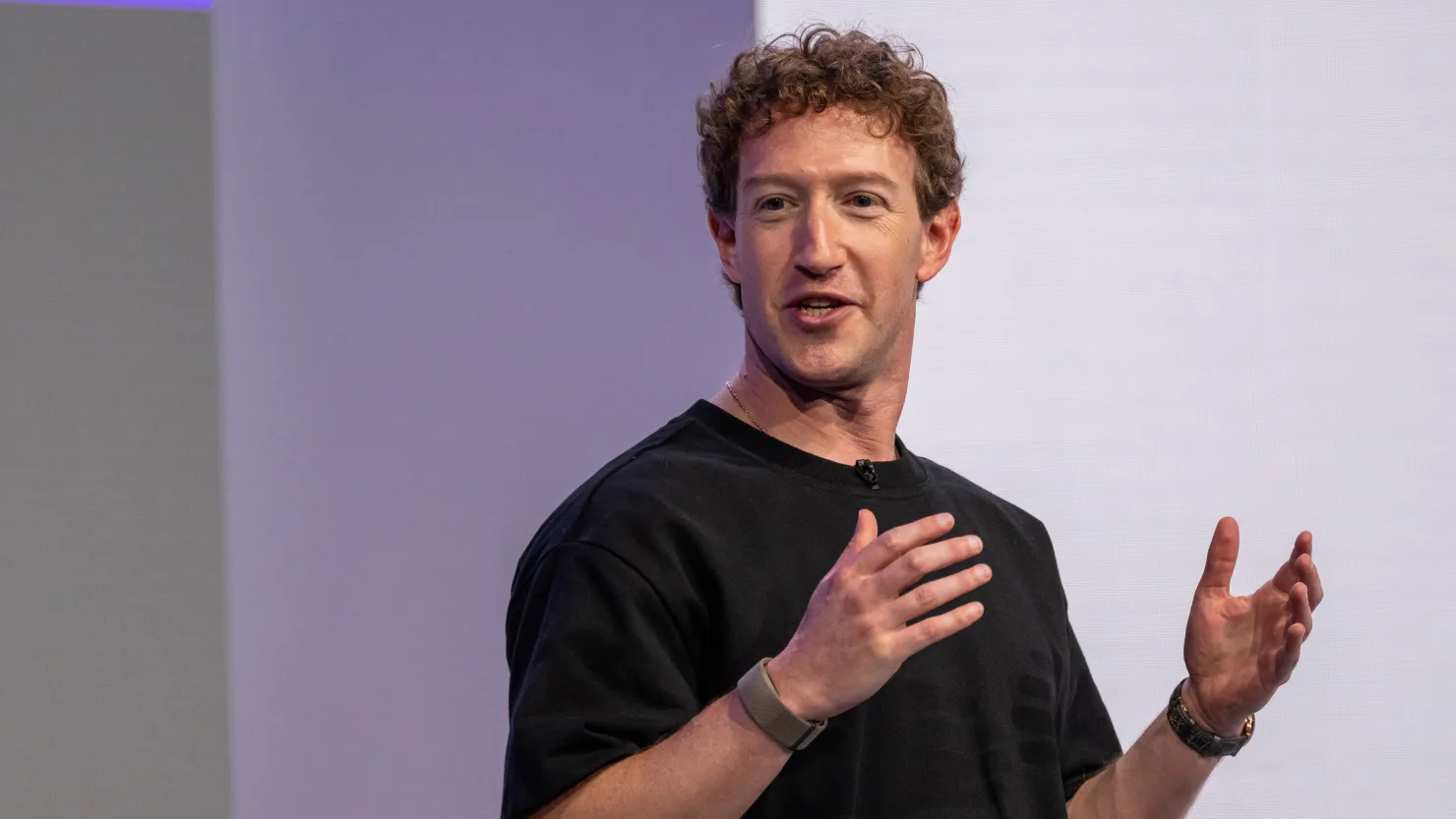
    Meta is once again trying to prove it can make money by doing something other than selling ads. It’s not a strategy that’s worked in the past, but CEO Mark Zuckerberg is betting artificial intelligence will bring better results.

    The company said this week that it will begin testing two subscription services for its ChatGPT-like Meta AI app and website. Those paid offerings, available first in Singapore, Guatemala and Bolivia, coincide with the official release of premium subscription plans for Instagram, Facebook and WhatsApp, and higher-tier versions of its verification subscription service, which is designed to help businesses protect their brand.

    Also this week, Zuckerberg said at Meta’s annual shareholder meeting that a potential cloud computing business is “definitely on the table,” a move that could eventually pit the company against Amazon, Microsoft and Google in cloud infrastructure.

    Since Zuckerberg’s company, previously known as Facebook, began selling digital ads almost two decades ago, advertising has been its only real business. In its earnings report last month, Meta said that nearly 98% of its $56.3 billion in first-quarter revenue came from advertising. It’s a remarkably lucrative market, with some of the highest profit margins in the tech industry, and one Meta has long dominated in the U.S., alongside Google.

    Meta just recorded its fastest growth rate for any quarter since 2021, showing that the online ad market is currently as robust as ever. But the rapid emergence of AI has raised questions about what happens if and when users turn to new interfaces for information and are no longer spending so much time on screens where they’re exposed to a constant barrage of links.

    And when Meta has asked consumers and companies to open their wallets for anything other than ads, the answer has generally been no.

    The 2018 debut of the Portal video-calling device was ultimately a bust and was taken off the market four years later. Meta’s $2 billion acquisition of virtual reality hardware startup Oculus in 2014 has yet to produce a breakout VR headset, resulting in the company’s Reality Labs unit racking up over $80 billion in operating losses since late 2020.

    Reality Labs has shifted resources from VR to the more promising AI-powered smart glasses. The company is trying to capitalize on the surprise success of the Ray-Ban Meta glasses, in partnership with EssilorLuxottica, a notable exception for Meta in hardware.

    Then there’s crypto. Zuckerberg jumped into the space in 2019 with a proposed cryptocurrency initiative called Libra. The effort faced intense regulatory scrutiny, resulting in the last remnant of the crypto project shuttering in 2022.

    Trying to sell social media services to businesses has also been a struggle. In 2016, Facebook debuted its business-focused Workplace chat product, only to announce in 2024 that it would eventually close the service.

    ‘New sources of revenue’
    Despite an uphill battle, some analysts are optimistic that Meta can find a new route to revenue in AI. The Meta AI subscriptions announced this week will cost $7.99 and $19.99 a month, depending on certain features and capabilities. The stock rose nearly 4% on Wednesday after the news landed.

    Analysts at Wolfe Research wrote in a note that day that subscriptions could contribute up-to $3 billion in Meta’s total revenue for 2027, growing to $16 billion by 2030. That’s still a small number for a company generating over $200 billion in revenue a year, but it marks a substantial opportunity for Meta in a burgeoning market.

    The Wolfe analysts said they recommend buying the stock “based on our long-term view that the company’s scale, AI investments, category leadership position, and product catalysts should enable META to outgrow the digital advertising market, gain scale, and generate new sources of revenue.”

    Meta declined to comment.

    Max Willens, an analyst at Emarketer, said Meta is a victim of its own success in online ads. Because the company’s core business dwarfs any other efforts, “it can be very hard for a corporate parent to sustain enthusiasm for something that is naturally going to be much smaller, likely forever,” he said.

    “The circumstances around each of Meta’s past endeavors are different,” Willens said. “But I would say that it is hard enough to succeed in one business, let alone two.”

    Willens said the subscription push could be successful if viewed as an aid to online advertising rather than an entirely new line of business. Because some of the new services are tailored to creators and power users, the goal could ultimately be to get more content for Meta’s apps and services and to keep people engaged on Facebook and Instagram for longer, he said.
    Selling technology to enterprises could be a much bigger challenge.

    Shashi Bellamkonda, research director at Info-Tech Research Group, said Meta has a lot of work to do to build an enterprise business “from the ground up, because the company is so focused only on direct to consumers.”

    Bellamkonda characterized Meta’s Workplace offering as seemingly “half-hearted, because they were so focused on only the social aspect of Facebook,” which makes money from ads.

    To successfully compete in the enterprise, particularly in cloud, Meta will have to “ramp up processes, platforms, technology, and most importantly, the manpower” required to operate, maintain, and sell products and services, Bellamkonda said. When it comes to customer support, Meta has been going in the opposite direction, cutting staff through layoffs.

    Zuckerberg made no guarantees that Meta would enter the cloud computing market, which is led in the U.S. by Amazon Web Services, followed by Microsoft Azure and then Google. The reason to do so, he said, would be if it turns out that the company has excess capacity after its hefty investments in AI infrastructure.

    In April, Meta raised its 2026 guidance for AI-related capital expenditures to between $125 billion and $145 billion, up from a prior range of $115 billion to $135 billion.

    Forrester analyst Naveen Chhabra said current cloud computing leaders “are winning because they have developed a huge stack” over the years, while “Meta does not have that, at least not yet.”

    Chhabra noted that past efforts by companies like Verizon and CenturyLink to create cloud businesses out of their vast data center resources didn’t pan out.

    “Historical evidences like telcos jumping in the cloud business hoping their capacity and network can bring business was proven wrong across geos and times,” Chhabra said.

  • Top Wall Street analysts see robust growth potential in these 3 stocks

    Top Wall Street analysts see robust growth potential in these 3 stocks

    The latest earnings season has eased concerns about a potential artificial intelligence bubble. Increased spending by hyperscalers and other companies has reinforced confidence in the demand for AI infrastructure and software solutions.

    Investors keen on capitalizing on the AI boom can track recommendations from top Wall Street analysts, who give key insights into a company’s ability to capture AI-driven demand despite macro uncertainties and rising competition.

    Here are three stocks favored by some of Wall Street’s top pros, according to TipRanks, a platform that ranks analysts based on their past performance.

    Datadog
    AI-powered observability and security platform Datadog
    (DDOG) is this week’s first pick. In early May, the company impressed investors with its market-beating first-quarter results and robust outlook.

    Following an investor webinar with Vikram Thaker, the senior director of North American business at global consulting firm Cognizant, Bank of America analyst Koji Ikeda reiterated a buy rating on Datadog stock and raised his price target to $260 from $225. The analyst said that following the webinar, he is more positive on the demand backdrop for “best-of-breed infrastructure software vendors” such as Datadog and JFrog
    . He believes that these two companies have the ability to surpass Bank of America and the Street’s estimates.

    Ikeda added that the demand for high-quality observability and security platforms like Datadog will increase as enterprises transition to the cloud and AI, making everything more complex. Consequently, he expects the momentum in Datadog’s performance to continue.

    The five-star analyst highlighted that Datadog delivered first-quarter results that were way above estimates. Also, the second-quarter revenue growth outlook of more than 30% reinforced Ikeda’s confidence in DDOG’s potential to generate further acceleration in its growth. He emphasized that new large AI-related deals prove Datadog’s mission-critical positioning and robust AI-led tailwinds.

    “Execution remains top notch, with improving demand trends supporting further beat-and-raise potential,” said Ikeda.

    Ikeda ranks No. 867 among more than 12,200 analysts tracked by TipRanks. His ratings have been profitable 55% of the time, delivering an average return of 10.4%. See Datadog Hedge Funds Activity on TipRanks.

    Micron Technology
    Micron Technology
    (MU) stock is having a solid run this year, thanks to unprecedented demand for memory fueled by the ongoing AI boom and elevated pricing stemming from supply challenges. Despite the impressive rally in MU stock, UBS analyst Timothy Arcuri significantly raised his price target to $1,625 from $535, while reaffirming a buy rating.

    “We believe the market will start to put a more ‘normal’ multiple on the stock and MU will continue to re-rate higher as more details emerge about the structural changes AI has driven to the entire memory complex,” said Arcuri.

    Notably, the five-star analyst again raised his calendar years 2027 to 2029 earnings per share estimates, citing traction in long-term agreements across the memory industry. Arcuri highlighted that these new LTAs are of longer durations, involve fixed-volume commitments, and have a partially fixed pricing structure. They are in contrast to offtake agreements in prior periods, which were simply volume-based.

    Furthermore, Arcuri’s supply chain checks on LTAs across the industry indicate that up to 30% of double data rate memory volumes could soon be locked in at pricing only slightly below current levels. The analyst explained that such agreements will allow Micron to trade some near-term revenue for strong demand visibility and a more stable earnings trajectory.

    Based on these LTAs, Arcuri expects Micron’s EPS to remain easily above $100 over 2027-2029 and expects the company to deliver $400 billion in free cash flow over this period. Specifically, the analyst raised his 2027, 2028, and 2029 EPS estimates to $155, $167, and $117, respectively, from $133, $122, and $77.

    Remarkably, Arcuri ranks No. 2 among more than 12,200 analysts tracked by TipRanks. His ratings have been profitable 81% of the time, delivering an average return of 56.6%. See Micron Ownership Structure on TipRanks.

    Lam Research
    Lam Research
    (LRCX), a provider of wafer fabrication equipment and services to the semiconductor industry, is this week’s third stock pick. The AI-led surge in semiconductor manufacturing has boosted demand for Lam Research and triggered a strong rally in its shares.

    Top Mizuho analyst Vijay Rakesh increased his price target for LRCX stock to $380 from $330 and reiterated a buy rating. His higher price target reflects strength in demand amid elevated WFE spending.

    Rakesh now expects WFE spending to rise 23% to $153 billion in 2026, with 2027 spending to see a 24% surge to $190 billion. In fact, he sees additional upside to these estimates, based on increased capex by Taiwan Semiconductor Manufacturing
    , or TSMC; Samsung; and Micron. Specifically, the total memory WFE investment is projected to be about $112 billion this year.

    “With higher revised 2026E/2027E WFE spend, we now see significant upside to consensus estimates for LRCX, MKSI, and AMAT, with LRCX potentially offering the most compelling estimate upside as the steady outperformer vs. WFE and peers,” said Rakesh.

    Also, the five-star analyst expects the WFE market to continue to benefit from accelerating NAND node transitions, with Lam Research highlighting $40 billion in node transition spending. The majority of this investment is expected before the end of 2027.

    Rakesh ranks highly as well. He is #4 among more than 12,200 analysts tracked by TipRanks. His ratings have been successful 74% of the time, delivering an average return of 79.2%. See Lam Research Statistics on TipRanks.

  • Best quotes from the 2026 IISS Shangri-La Dialogue: Defense spending, multilateralism and the future of the Asia-Pacific

    Best quotes from the 2026 IISS Shangri-La Dialogue: Defense spending, multilateralism and the future of the Asia-Pacific

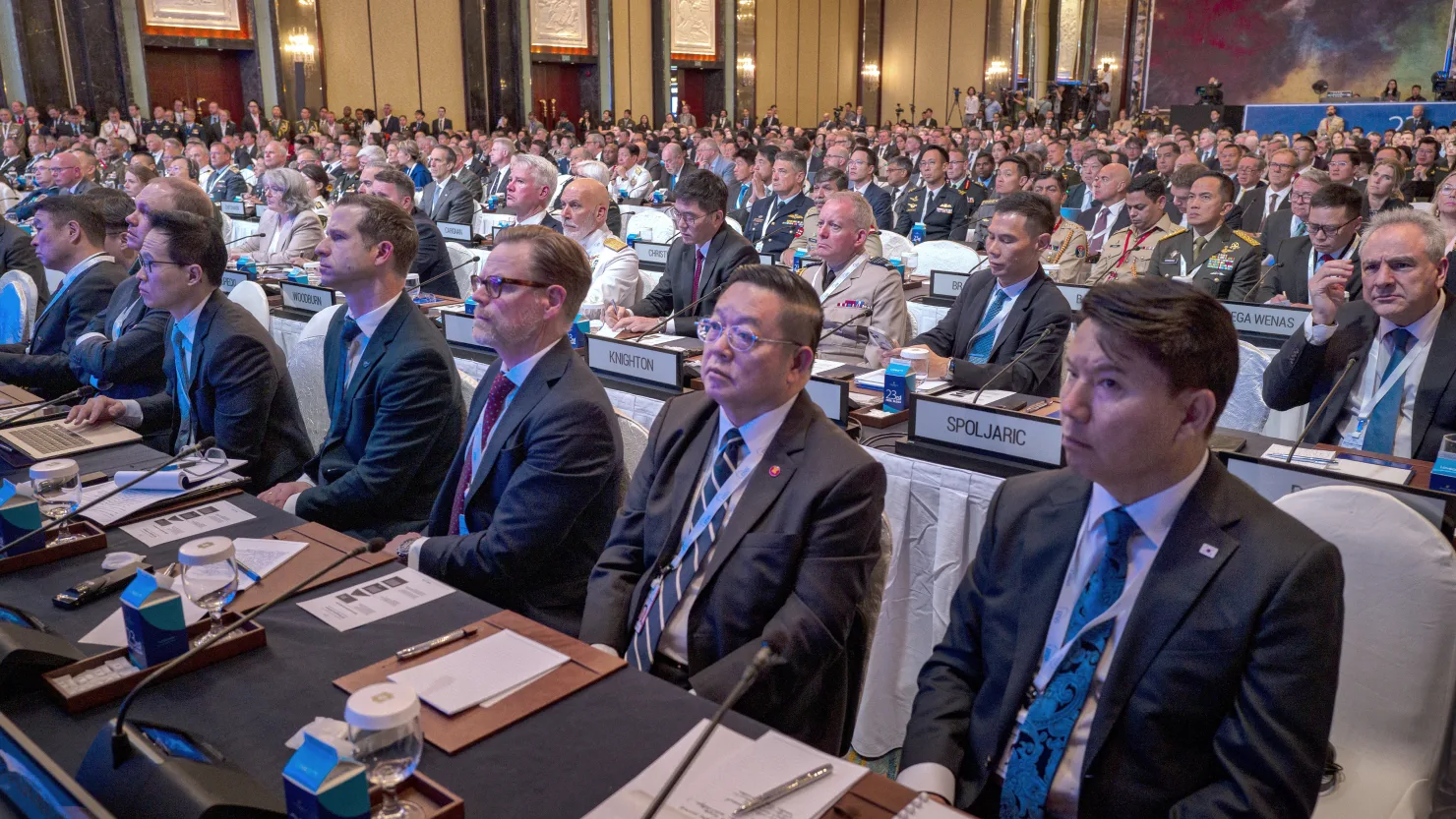
    As Asia’s premier defense summit wraps up, leaders have put forward perspectives on a range of topics in the defense realm.

    Here are some of the most interesting quotes that CNBC has heard during the summit.

    On defense spending

    SINGAPORE, SINGAPORE - MAY 31: Dutch Deputy Prime Minister and Defence Minister Dilan Yesilgoz-Zegerius speaks during the 23rd IISS Shangri-La Dialogue at the Shangri-La Hotel on May 31, 2026 in Singapore. Senior defence officials and military leaders from across the Asia-Pacific and beyond convene at the Shangri-La Hotel in Singapore for the International Institute for Strategic Studies (IISS) Shangri-La Dialogue, one of Asia's premier track-one intergovernmental security forums. (Photo by Ezra Acayan/Gett

    SINGAPORE, SINGAPORE – MAY 31: Dutch Deputy Prime Minister and Defence Minister Dilan Yesilgoz-Zegerius speaks during the 23rd IISS Shangri-La Dialogue at the Shangri-La Hotel on May 31, 2026 in Singapore. Senior defence officials and military leaders from across the Asia-Pacific and beyond convene at the Shangri-La Hotel in Singapore for the International Institute for Strategic Studies (IISS) Shangri-La Dialogue, one of Asia’s premier track-one intergovernmental security forums. (Photo by Ezra Acayan/Getty Images)

    Ezra Acayan | Getty Images News | Getty Images

    Allies who refuse to step up and carry their own weight for our collective defense will face a clear shift in how we do business.

    — Pete Hegseth, U.S. Secretary of Defense

    You have a choice, you’re either on the menu or you’re having a seat at the table, and if you don’t step up with your defense spending, make sure that you are also delivering, then you will be on the menu, and I don’t want the Dutch, the Netherlands be on the menu, I want to have a voice at the table.

    — Dilan Yesilgoz-Zegerius, Netherlands Deputy Prime Minister and Defence Minister

    The Philippines is dead set on building its own resilience by increased defense spending by gearing up for acquiring greater capabilities, more lethal deterrence capabilities, building deterrence, and at the same time broadening its alliances.

    — Gilberto Teodoro, Philippines National Defence Secretary

    The more powerful we are, the more effort we need to spend to reassure others, because ultimately in the defense sector people look at not just capabilities, people look at intention.

    — Chan Chun Sing, Singapore Defence Minister

    Defense is an important part of maintaining our sovereignty individually as countries, and having the ability to get together to complement each other’s capabilities is incredibly important. No one country can do it all alone.

    — General Jennie Carignan, Chief of the Defense Staff of Canada

    On the Asia-Pacific region

    SINGAPORE, SINGAPORE - MAY 29: Vietnamese President To Lam delivers the keynote address during the 23rd IISS Shangri-La Dialogue at the Shangri-La Hotel on May 29, 2026 in Singapore. Senior defence officials and military leaders from across the Asia-Pacific and beyond convene at the Shangri-La Hotel in Singapore for the International Institute for Strategic Studies (IISS) Shangri-La Dialogue, one of Asia's premier track-one intergovernmental security forums. (Photo by Ezra Acayan/Getty Images)

    SINGAPORE, SINGAPORE – MAY 29: Vietnamese President To Lam delivers the keynote address during the 23rd IISS Shangri-La Dialogue at the Shangri-La Hotel on May 29, 2026 in Singapore. Senior defence officials and military leaders from across the Asia-Pacific and beyond convene at the Shangri-La Hotel in Singapore for the International Institute for Strategic Studies (IISS) Shangri-La Dialogue, one of Asia’s premier track-one intergovernmental security forums. (Photo by Ezra Acayan/Getty Images)

    Ezra Acayan | Getty Images News | Getty Images

    The Asia-Pacific is an open space, and all countries with legitimate interests can have a role to play in contributing to its peace, stability, and development…What the region seeks is neither the mere presence nor absence of any major power. What it seeks is responsible commitment.

    — To Lam, President of Vietnam

    While a decent peace is our goal, make no mistake, America is a Pacific nation, and we insist that China respect our longstanding position in the region.

    — Pete Hegseth, U.S. Defense Secretary

    If the one-China principle is upheld, if [there is] no external interference into China’s process of national reunification, then Chinese living on the two sides of Taiwan Strait, we would be fully capable of finding a solution and achieve national reunification, and if that comes, I can assure you any instability in the Taiwan Strait will be removed once and for all.

    — Cui Tiankai, former Vice Minister of Foreign Affairs, China

    Some of you may have heard the term “neo-militarism,” but nothing [is] further from the truth. Think about it. There is a country that has a huge arsenal of nuclear weapons and strategic bombers. Japan has neither of such weapons, and yet Japan is labeled “neo-militarist.” Isn’t it strange?

    — Shinjiro Koizumi, Japan Defence Minister

    [China is] unrepentant with their expansionism and unrelenting, and to deny that would be to be absolutely dishonest… China is not accountable at all, either to their own domestic people, because of the autocratic nature of their government, and they’ve been non-transparent and actually dishonest in their international engagements.

    — Gilberto Teodoro, Philippines National Defence Secretary

    On multilateralism

    SINGAPORE, SINGAPORE - MAY 30: Australia Deputy Prime Minister and Defence Minister Richard Marles speaks during the 23rd IISS Shangri-La Dialogue at the Shangri-La Hotel on May 30, 2026 in Singapore. Senior defence officials and military leaders from across the Asia-Pacific and beyond convene at the Shangri-La Hotel in Singapore for the International Institute for Strategic Studies (IISS) Shangri-La Dialogue, one of Asia's premier track-one intergovernmental security forums. (Photo by Ezra Acayan/Getty Ima

    SINGAPORE, SINGAPORE – MAY 30: Australia Deputy Prime Minister and Defence Minister Richard Marles speaks during the 23rd IISS Shangri-La Dialogue at the Shangri-La Hotel on May 30, 2026 in Singapore. Senior defence officials and military leaders from across the Asia-Pacific and beyond convene at the Shangri-La Hotel in Singapore for the International Institute for Strategic Studies (IISS) Shangri-La Dialogue, one of Asia’s premier track-one intergovernmental security forums. (Photo by Ezra Acayan/Getty Images)

    Ezra Acayan | Getty Images News | Getty Images

    What we are about is seeing the maintenance of the global rules-based order in the Indo-Pacific, and for that matter, around the world… the global rules give a country like Australia, a middle power, agency in a way that a world ruled simply by power and might does not.

    — Richard Marles, Australia Deputy Prime Minister

    [The U.S. will] be able to do all sorts of things here, whether it’s freedom of navigation or disaster response. I do think that there are some opportunities here, and it’s nice to see some of our other partners step up in a very multilateral way.

    — U.S. Senator Tammy Duckworth, Democrat from Illinois

    We were told that rules matter, commitments matter, and international norms would apply equally to all nations, regardless of size and power, but today treaties, humanitarian principles, and international commitments are being disregarded and selectively interpreted whenever these do not align with geopolitical interests.

    — Mohamed Khaled bin Nordin, Malaysia Defence Minister

    The current global security governance mechanisms urgently need reform. Developed countries are overrepresented, while developing countries are severely underrepresented. This does not conform to the trend of the times.

    — Major General Meng Xiangqing, Professor, People’s Liberation Army National Defence University, China

    [China is] definitely losing a chance of dialogue, a chance of dialogue in a time which is contested, which is…dangerous. In my 42 years as a soldier, I’ve never experienced such dangerous times like we are living in the world as today.

    — General Carsen Breuer, Germany Chief of Defence

    [The Dialogue] is a great framework for getting together and having pretty decent discussions on security between what’s still called the “collective West”, but fragmented Asia, because there is no “collective Asia” here anymore.

    — Pavlo Klimkin, former Ukrainian minister of foreign affairs

  • Trump and Xi conclude ‘very successful’ talks but few deals confirmed

    Trump and Xi conclude ‘very successful’ talks but few deals confirmed

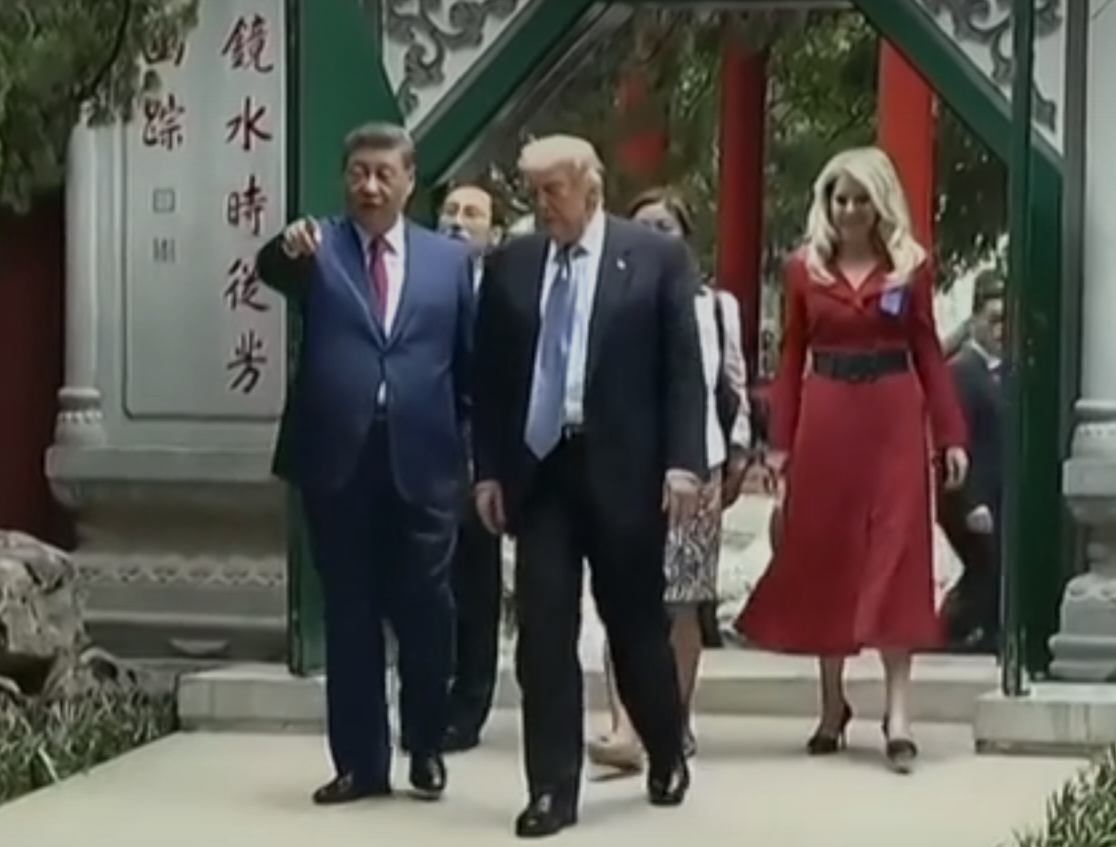
    US President Donald Trump left Beijing after a two-day summit saying he had struck “fantastic trade deals, great for both countries”, but few details have emerged on what the two superpowers agreed.

    Trump arrived for a high-stakes summit with Chinese leader Xi Jinping on Wednesday, accompanied by several CEOs: a high-profile business delegation spanning agriculture, aviation, electric vehicles and artificial intelligence (AI) chips.

    Trade was near the top of the agenda despite recent tensions over the Iran war, and businesses hoped for key deals as well as an extension of the tariff truce that is due to expire in November.

    The visit was defined by warm rhetoric and symbolism. Trump was wooed with a packed itinerary that included an honour guard, a state banquet, and an invitation to the exclusive compound where China’s Communist Party leaders live and work.

    The US president seemed impressed and invited Xi to the White House in September. He said talks had been “very successful”, while Xi called it a “historic and landmark” visit.

    China’s Foreign Minister Wang Yi confirmed on Friday that Xi would visit the White House in the autumn.

    But neither side has announced trade breakthroughs or significant business deals.

    President Trump, however, spoke to reporters aboard Air Force One and said China had agreed to buy 200 Boeing jets, with a potential commitment to buy an additional 750 planes. The aerospace giant confirmed the deal.

    Trump also said American farmers will be happy with his trade deals because China would be buying “billions of dollars” of soybeans.

    There has been no confirmation of any deals or purchases from the Chinese.

    If the Boeing orders are finalised, this would be the plane-maker’s first major Chinese deal in nearly a decade. It was largely shut out of the world’s second-largest aviation market because of trade tensions between Beijing and .

    0:39Trump touts potential Boeing deal with China

    Asked about Trump’s earlier comments to Fox News in which he said deals had been made, Chinese foreign ministry spokesperson Guo Jiakun only said that the “essence of China-US economic and trade relations is mutual benefit and win-win co-operation”.

    He added that both sides should work to implement the “important consensus” reached by the two leaders and bring greater stability to bilateral trade ties and the global economy.

    There are still questions over the trade truce agreed in October, when Washington suspended steep tariff increases on Chinese goods while Beijing eased back from restricting rare earth exports critical for manufacturing.

    Suprisingly Trump told reporters on Air Force One that he and Xi did not discuss tariffs at all.

    The White House however said both leaders agreed to establish a “Board of Trade” to manage the relationship without having to reopen tariff negotiations.

    US Treasury Secretary Scott Bessent, who had been leading trade talks for Washington, said in a pre-recorded interview with CNBC that he expected progress on a mechanism to support future investment.

    US officials have cautioned, however, that there is a lot of work to be done before these announcements can go into effect.

    Tech and trade

    One of the most closely watched moments came as Air Force One touched down in Beijing on Wednesday night.

    Tesla CEO Elon Musk stepped off the plane ahead of senior officials including Pete Hegseth, Marco Rubio and Greer – a sign of the crucial economic agenda that lay ahead.

    And Musk and US chipmaker Nvidia’s boss Jensen Huang stayed close to Trump during the welcome ceremony, and were prominent during the banquet.

    Huang’s appearance was notable because he was not meant to be part of the delegation originally – but when he joined the trip, it fuelled speculation that AI and access to chips was a bigger part of the talks than previously thought.

    With electric vehicles, AI and semiconductors becoming key battlegrounds in the US-China rivalry, both Tesla and Nvidia are very exposed to China.

    Tesla relies heavily on its Shanghai gigafactory and Chinese consumers, while Nvidia wants to be able to start selling advanced chips to China again, which is currently prohibited by US export controls.

    US export controls are aimed at limiting China’s access to frontier AI capabilities, but Greer said they were not a major talking point at the summit.

    Beijing, however, continues to push for greater access to advanced tech, while criticising what it sees as efforts to constrain its industrial development.

    AI was expected to be a big part of conversations. “We talked about possibly working together for guardrails”, Trump told reporters. When asked about what kind of guardrails, he added: “Standard guardrails that we talk about all the time.”

    Selling to China

    Last year’s tit-for-tat tariff war also hit American farmers, who want to export more soybeans, beef and poultry to China.

    According to US trade representative Jamieson Greer, deals on Chinese purchases of US agricultural products have been firmed up. But China’s foreign ministry did not confirm any such new deals, saying only that both sides had agreed to maintain stable trade ties and expand co-operation based on “equality, mutual respect and mutual benefit”.

    The White House said the talks also touched on expanding Chinese market access for US companies and increasing Chinese investment in US industries.

    While China is a major market for US companies, it is also a difficult operating environment because of regulation, red tape and geopolitical uncertainty.

    But Beijing seemed to strike a positive note on this issue. Xi told US business leaders that China’s “doors will open wider” and that American firms would have “broader prospects” in the Chinese market, according to news site Xinhua.

    He also called for expanded co-operation in trade, agriculture, healthcare, tourism and law enforcement, describing bilateral ties as “mutually beneficial” and delivering “win-win results”.

    The red line: Taiwan

    Taiwan, the US ally and self-governed island that Beijing claims, has largely been treated as one of several friction points between the US and China during trade talks over the past year.

    But this time Beijing linked Taiwan to the broader economic relationship with the United States.

    According to Beijing’s readout, Xi said the two sides had agreed to a “new positioning” for relations based on “constructive strategic stability”, but issued the now-familiar warning that Taiwan remained the most sensitive issue.

    “The Taiwan question is the most important issue in China-US relations,” Xi warned during the talks, according to Chinese state media.

    “If mishandled, the two nations could collide or even come into conflict,” he said.

    Taipei would be watching closely but it’s hard to say yet if and how this will affect US collaboration with semiconductor companies in Taiwan, or its long-standing close relationship with the island.

    Unresolved fault lines

    The war against Iran and the resulting blockade of the Hormuz Strait was a key part of the agenda, and Trump entered the talks hoping for Chinese co-operation on the Iran conflict and the oil market.

    Trump has said that China could use its influence to encourage Iran to stabilise flows through the Strait of Hormuz, a key global energy artery.

    “[Xi would] like to see the Hormuz Strait open, and said ‘if I can be of any help whatsoever, I would like to help,’” Trump told Fox News.

    The Chinese foreign ministry was more vague, and released a statement on Friday calling for “a comprehensive and lasting ceasefire”.

    “Shipping lanes should be reopened as soon as possible in response to the calls of the international community,” it added.

    Chinese readouts indicated that while the Middle East was discussed, details were limited.

    The conflict is a challenge for the Chinese economy too. Oil price volatility and repeated disruptions to supply routes have increased China’s import costs and pushed up prices across the world.

    Trump has already invited Xi to ​the White House ​in September for a second summit.

    Discussions between the two sides are expected to continue ahead of that summit, with the hope that the world’s two biggest economies can deliver a major breakthrough on trade that proved elusive this time around.